

These days, you’re going to want to get your price right when you get ready to sell your house. Honestly, it’s more important than ever. Why? While you may want to list high just to see what happens, that’s a plan that can easily backfire, and it’s going to cost you in today’s market.
And the risk isn’t just missing out on offers, it’s missing out on the move you needed to make in the first place.
Many homeowners remember what their neighbor’s house sold for a few years ago, and they want to chase that same sky-high number. The problem is, that was a different market.
Today, there are more homes for sale. Buyers have more options to choose from. They don’t have to get into bidding wars where they offer way over asking just to compete. Now they can come in at, or even below, list price. And if you’re not open to that, they’ll move on. Lisa Sturtevant, Chief Economist at Bright MLS, explains:
“Buyers will have more leverage in many, but not all, markets. Sellers will need to adjust price expectations to reflect the transitioning market.”
But here’s the good news. You still have one big advantage as a seller. According to the Federal Housing Finance Agency (FHFA), home values went up by a staggering 54% over the last 5 years. So, even if you compromise just a little bit on your sale price today, odds are you’ll still come out way ahead.
The challenge? Most sellers aren’t thinking about it that way. They’re stuck on what a neighbor got months or years ago – and that’s a costly mistake.
Here’s what happens. A seller lists too high. Buyers stay away. No offers come in. The house sits. And suddenly, that seller is facing a tough decision. Do they cut the price? Stick it out? Or give up altogether?
Unfortunately, a late price cut may not be enough. Buyers often see that as a red flag that something’s wrong with the house. That’s why some sellers are opting to just pull their listing off the market entirely.
In a recent survey from John Burns Research and Consulting (JBREC) and Keeping Current Matters(KCM) over half of agents (54%) say there are more homes being taken off the market than usual.
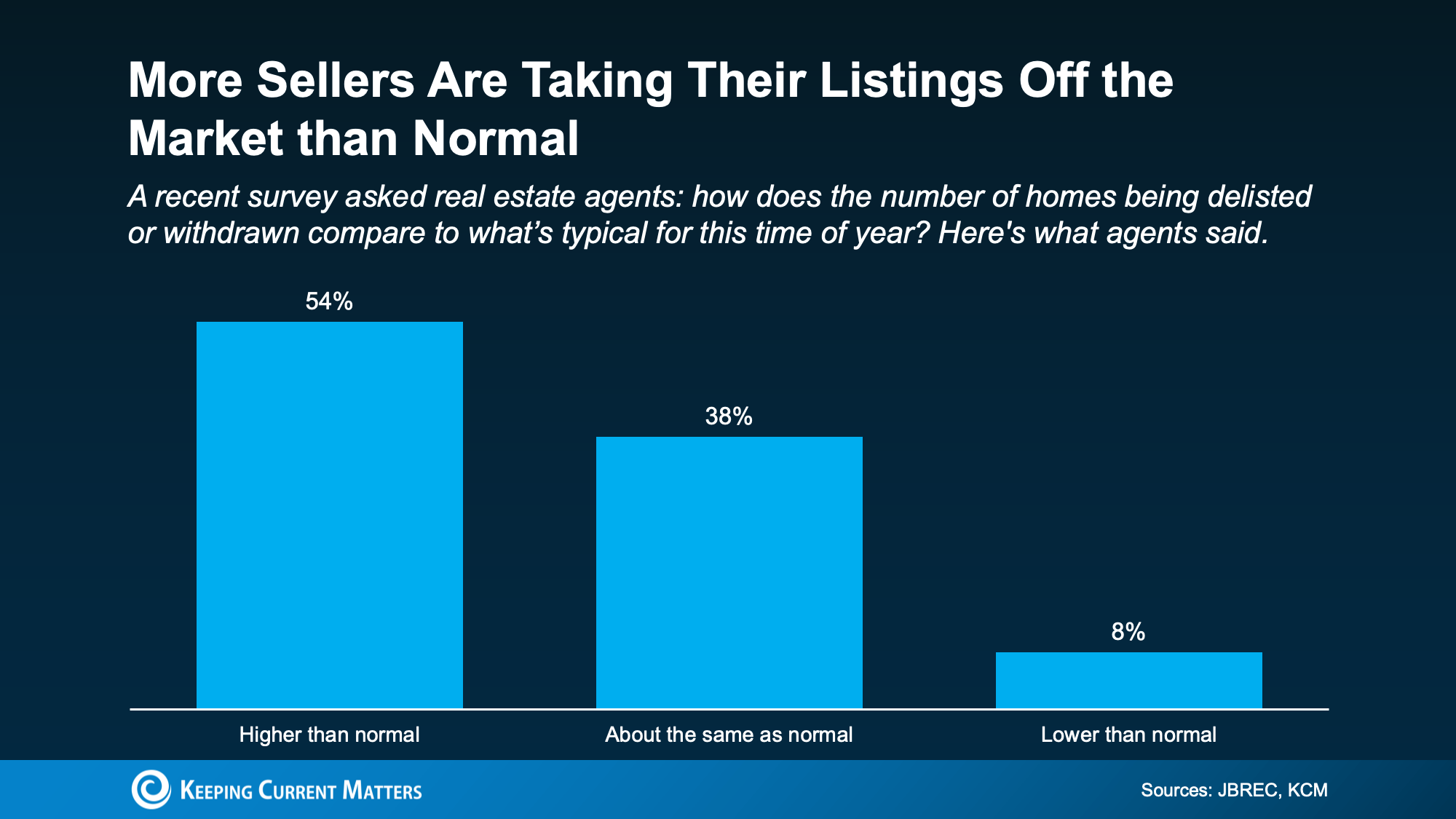 And the top reasons for that? According to the agents, homeowners didn’t get any offers they felt were fair. The survey from JBREC and KCM explains it like this:
“Sellers holding onto high price expectations is the leading reason they are delisting their homes.”
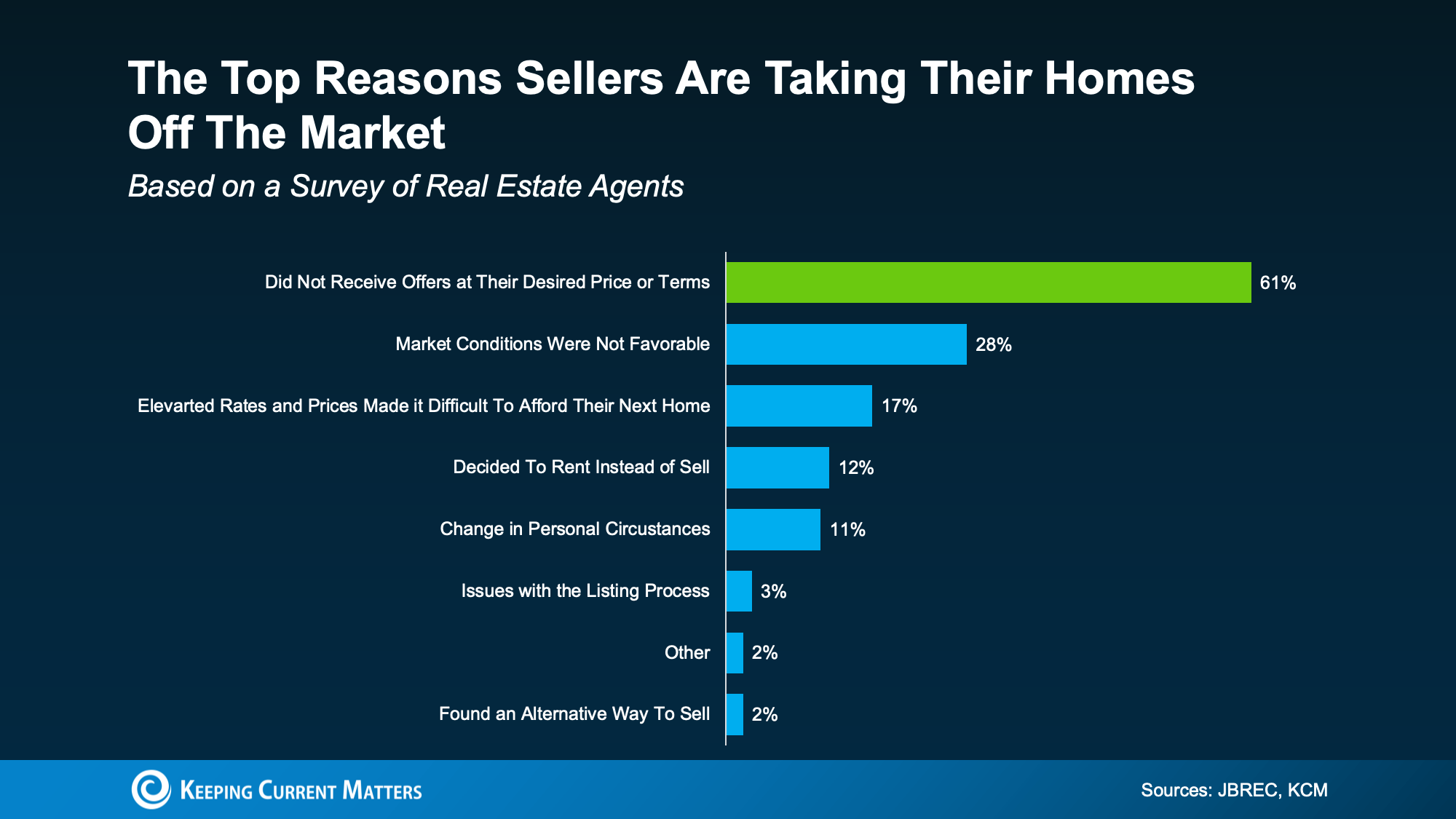 BrightMLS data backs this up:
“. . . sellers are delisting after having their home on the market and finding they are not getting the price they hoped for.”
It’s more proof pricing too high does more than turn buyers away, it puts your whole move at risk. Because if no one looks at your home or makes an offer, how are you going to sell it?
If you’re selling to relocate for a job, need more space for your growing family, or have to be closer to your relatives as they age, you can’t afford to get stuck. You need a pricing strategy that helps you move forward – and that starts with the right agent.
The sellers who are winning right now are the ones working with experienced local agents who know the current market and aren’t afraid to have honest conversations about price.
And it’s paying off. In the right price range and condition, homes are still selling fast, sometimes even with multiple offers.
Pricing your house for today’s market isn’t just about getting it sold. It’s about making sure your move doesn’t stall before it starts.
Give us call to learn what buyers are currently paying for homes in your area right now, and how to price your home accordingly.
If you’ve been following real estate news lately, you’ve probably seen headlines saying home prices are flat. And at first glance, that sounds simple enough. But here’s the thing. The reality isn’t quite that straightforward.
In most places, prices aren’t flat at all.
While we’ve definitely seen prices moderate from the rapid and unsustainable climb in 2020-2022, how much they’ve changed is going to be different everywhere.
If you look at data from ResiClub and Zillow for the 50 largest metros, this becomes very clear. The real story is split right down the middle. Half of the metros are still seeing prices inch higher. The other half? Prices are coming down slightly (see graph below).
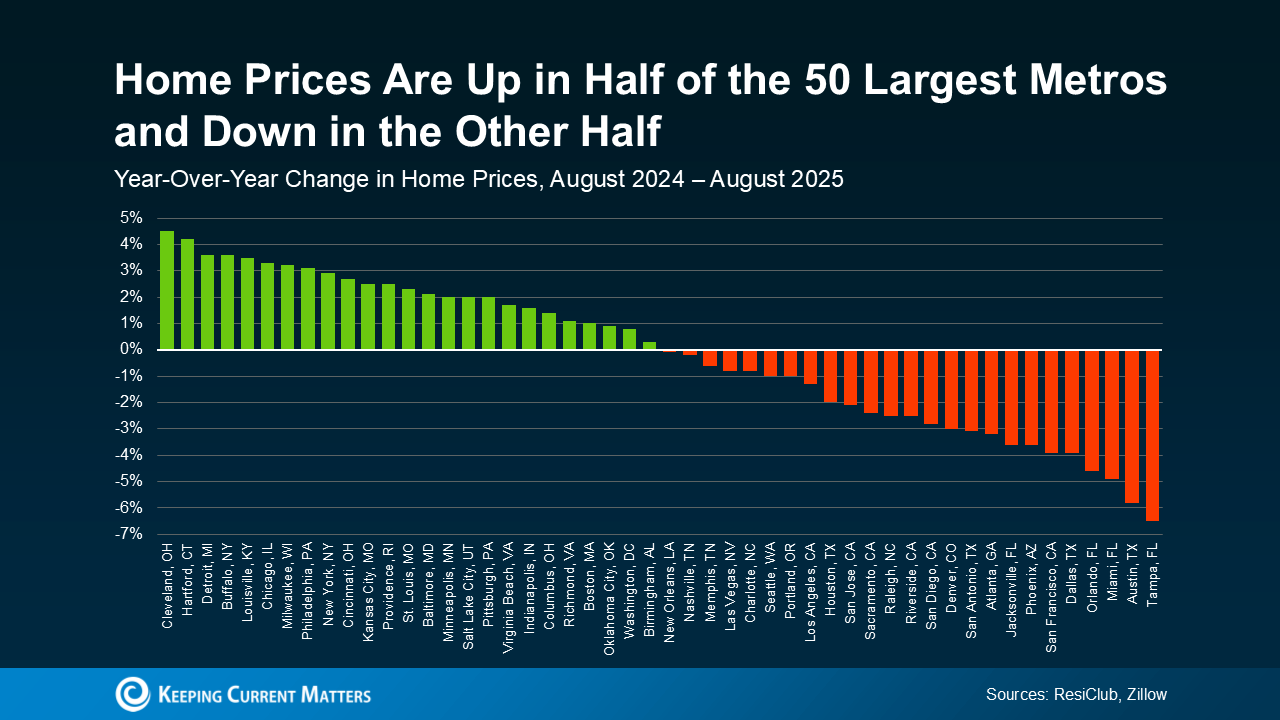 The big takeaway here is “flat” doesn’t mean prices are holding steady everywhere. What the numbers actually show is how much price trends are going to vary depending on where you are.
One factor that’s driving the divide? Inventory. The Joint Center for Housing Studies (JCHS) of Harvard University explains:
“ . . . price trends are beginning to diverge in markets across the country. Prices are declining in a growing number of markets where inventories have soared while they continue to climb in markets where for-sale inventories remain tight.”
When you average those very different trends together, you get a number that looks like it’s flat. But it doesn’t give you the real story and it’s not what most markets are feeling today. You deserve more than that.
And just in case you’re really focusing on the declines, remember those are primarily places where prices rose too much, too fast just a few years ago. Prices went up roughly 50% nationally over the past 5 years, and even more than that in some of the markets that are experiencing a bigger correction today. So, a modest drop in some local pockets still puts most of those homeowners ahead when it comes to the overall value of their home. And based on the fundamentals of today’s housing market, experts are not projecting a national decline going forward.
So, what’s actually important for you to know?
You need to know what’s happening in your area because that’s going to influence everything from how quickly you need to make an offer to how much negotiating power you’ll have once you do.
The bottom line? Knowing your local trend puts you in the driver’s seat.
You’ll want to be aware of local trends, so you’ll know how to price your house and how much you can expect to negotiate.
The big action item for homeowners? Sellers need to have an agent’s local perspective if they want to avoid making the wrong call on pricing – and homes that are priced right are definitely selling.
The national averages can point to broad trends, and that’s helpful context. But sometimes you’re going to need a local point of view because what’s happening in your zip code could look different. As Anthony Smith, Senior Economist at Realtor.com, article puts it:
“While national prices continued to climb, local market conditions have become increasingly fragmented…This regional divide is expected to continue influencing price dynamics and sales activity as the fall season gets underway.”
That’s why the smartest move, whether you’re buying or selling, is to lean on a local agent who’s an expert on your market.
They’ll have the data and the experience to tell you whether prices in your area are holding steady, moving up, or softening a bit – and how that could impact your move.
Headlines calling home prices flat may be grabbing attention, but they’re not giving you the full picture.
Has anyone taken the time to walk you through what’s happening in your market?
If you would like to know more about the market in your area, contact LaFleur Realty Group for greater insight and information.